AVPA Paris 2026

The only Kenyan coffee on the winners' list

Utake Coffee’s Medium Roasted, grown at Ibonia Estate and roasted here in Nairobi, has been awarded a Gourmet Medal at the 12th International Contest for Coffees Roasted at Origin.

The record

Contest12th International Contest, “Coffees Roasted at Origin”
OrganiserAVPA — Agency for the Valorisation of Agricultural Products, Paris
CoffeeMedium Roasted
FarmIbonia Estate, Kiambu, Kenya
CategoryAcidulé Fruité (Acidic & Fruity)
Tasting typeFiltre (Filter)
AwardMédaille Gourmet (Gourmet Medal)
CeremonySeptember 2026, Paris Coffee Show

A peaberry, and why that matters

Roughly one cherry in twenty produces a single round bean instead of the usual two flat halves. Those are peaberries, and in Kenya they are separated out by screen as their own grade — PB.
The lot we entered is a peaberry. Because the bean is smaller, denser and rounder, it moves through a roast differently: heat travels more evenly into it, and there is no flat face to scorch. Handled carefully, it holds acidity that a mixed lot would blunt.
That is the whole argument for entering it in a filter category judged on acidity and fruit. The bean grade, the roast profile and the category were one decision, not three.

Black CurrantBerryChocolateLively AcidityCane Sugar Sweetness

Ibonia Estate, Kiambu

Ibonia is a 105-hectare estate in the hills just outside Kiambu town, a short drive north of Nairobi, planted with SL28 and SL34 on deep red volcanic soil at 1,700 metres. At that altitude the climate is cool enough to slow the cherry down and stretch out ripening — which is where the complex sugars and acids come from, and why Kenyan coffee cups the way it does.
The processing is traditional Kenyan and unhurried. Cherry is selectively handpicked and float-sorted so only the ripest and densest go forward. It is pulped, fermented for twelve to twenty-four hours, then washed to strip the last of the mucilage.
Then comes the step worth paying attention to: the parchment is soaked in clean water for a further twenty-four hours before it ever reaches a drying bed. Soaking began as a practical answer to limited bed space at peak harvest. It has since been shown to raise cup scores — a cleaner, brighter profile. For a coffee entered in an acidity-driven filter category, that is not an incidental detail.
Drying takes seven to fifteen days on raised beds, turned constantly and tarped against direct sun and moisture so it happens slowly and evenly. Nothing about any of it is clever. It is simply done properly, every day, by people who have done it for a long time.
Nearly sixty percent of the estate has never been planted at all. It is left as wild natural forest, with the wildlife that comes with it, and the pulping water runs through settling lagoons before it leaves the farm. On a 105-hectare property inside commuting distance of Nairobi, choosing not to plant sixty percent of your land is a decision with a price attached. It is also the reason there is still soil worth farming.

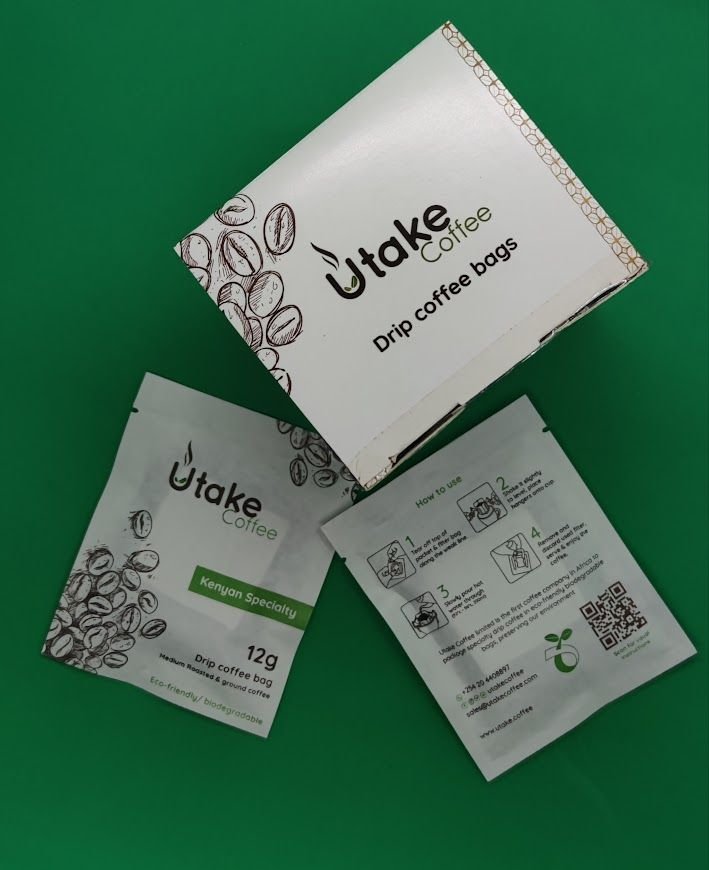
Kiambu is disappearing

This part matters more than the tasting notes.

Kiambu borders Nairobi, and land that borders a growing capital city is worth more as plots than as coffee. Growers here face low yields from pests and disease while paying high prices for inputs, and year after year some of them sell to developers building out from the edge of the city. Every season there is less Kiambu coffee than there was — not because the quality fell, but because the ground itself is being converted.
So a Paris medal for a Kiambu peaberry is not only a result. It is an argument: that this land is worth more planted than paved, and that the way to prove it is to keep producing coffee good enough that the world notices.
Ibonia grew it. We roasted it. Thirty-five kilometres apart — under an hour’s drive — and that is precisely the point of a contest for coffees roasted at origin.

We don’t just teach the standard. We meet it.

Utake Coffee is an SCA Premier Training Campus — the only one in Africa. Our training arm is led by Mbula Musau, Utake’s in-house Q Instructor and Africa’s first Q Instructor.
Teaching quality and producing it are not the same discipline, and we think a training campus should be able to do both. This medal is the version of that claim you can taste.

The full 2026 results are published by AVPA at en.avpa.fr/cafes.